- Culture
- Adventure
Canòlich Sanctuary in Andorra: history, how to get there and aplec
History, legend and aplec in the south of Andorra
Discover the history of Canòlich Sanctuary in Andorra
Canòlich Sanctuary stands in Sant Julià de Lòria, in the south of Andorra, at an altitude of 1,635 metres. In 1745 Fiter i Rossell already counted it among the three main sanctuaries of the valleys, and every May it still draws hundreds of people. If you are staying at Hotel Grau Roig, which features in the MICHELIN Guide, this makes a full day out: the sanctuary lies on the other side of the country, so it is worth setting off in good time and giving it the whole day.
A history that begins in the Middle Ages
The earliest references to Canòlich date from 1176. The building you see today is from the early 20th century, and the evidence suggests it was raised on the foundations of an earlier Romanesque structure. Its historical importance is clear enough: in 1745, the Manual Digest de les Valls Neutras de Andorra by Antoni Fiter i Rossell named it as one of the three main sanctuaries of the valleys, alongside Meritxell in Canillo and Sant Antoni de la Grella in La Massana.
Tradition places the discovery of the image of the Virgin in 1223, a date that has never been proven. In 2023, Sant Julià de Lòria marked 800 years since that discovery with a whole month of religious, cultural and festive events.
The legend of the shepherd and the bird
The legend tells of a shepherd who found a bird with brilliant plumage near Canòlich. He took it home, but the next day it had gone back to the same spot. This happened three times, and on the third occasion the shepherd discovered an image of the Virgin in a hollow in the rock. It is passed down as a popular tale, without documentary support, and it is part of the charm of the place.
What you can see
Inside the sanctuary there is an 18th-century Baroque altarpiece, as well as ceramic murals by the artist Mas. The original statue of the Virgin is not kept here: it is a Romanesque carving in polychrome wood, 72 centimetres tall and dating from the late 12th century, crowned by the Vatican in 1999. It is held in the parish church of Sant Julià i Sant Germà, in the centre of Sant Julià de Lòria, and the Virgin is the patron saint of the parish.
If the country’s religious art interests you, round off your visit with our selection of Romanesque churches in Andorra. In the same parish you will find Sant Serni de Nagol, from 1055, set on high ground with views over the valley.
How to get to Canòlich Sanctuary: a complete guide
Canòlich sits just off the CS-600 road, between Bixessarri and the Coll de la Gallina. The tourist office describes it as an alpine spot that is hard to reach, so take the climb at an easy pace. Grau Roig is at the opposite end of Andorra: you will need to cross the country to Sant Julià de Lòria before you start going up.
1. By car
From Sant Julià de Lòria, follow the road towards Bixessarri. Before you set off, enter the coordinates into your satnav: N 42° 28′ 28″, E 1° 27′ 7″. The final stretch climbs steeply, although it is perfectly manageable by car.
2. Accessibility
Despite the rugged setting, the sanctuary is adapted for people with reduced mobility.
3. If you are cycling
Above the sanctuary, at the Coll de la Gallina (1,910 metres), there is a monument to the cyclist Joaquim “Purito” Rodríguez. It is one of the toughest climbs in the country and a fine goal if you are travelling with your bike.
4. Back at the hotel
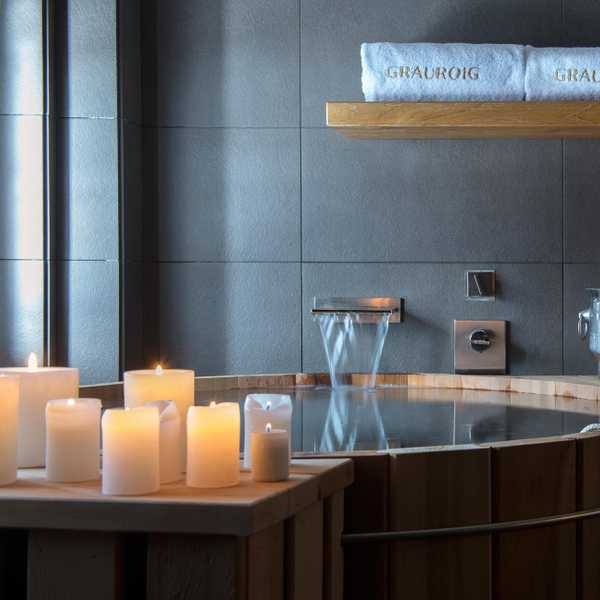
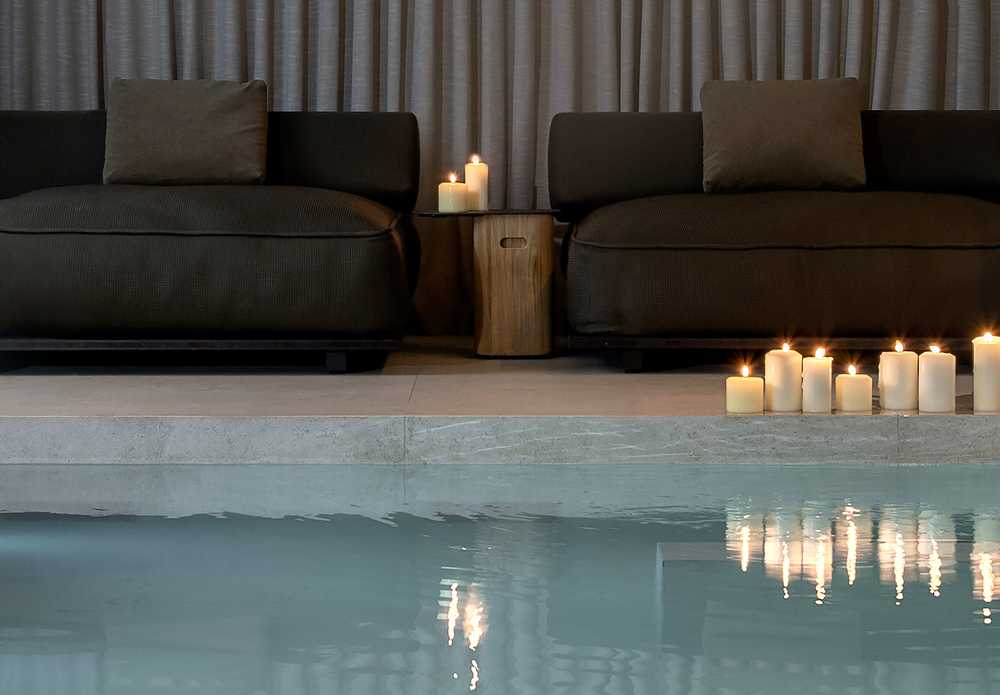
When you return to Grau Roig, the hotel spa offers a heated pool, hot tub, sauna, Turkish bath and relaxation area. It is open from 10:00 to 21:00 and access is included for guests.
5. What else to do in the area
The parish has enough to fill a longer day. The Balma de la Margineda is an archaeological site showing human presence from 10,000 BC, close to the Margineda bridge, one of the historic bridges of Andorra. If you are travelling with children, Sant Julià Màgica is a family route of about 3 kilometres with 10 stops, designed for ages 7 and up.
Andorra’s cultural heritage: the significance of Canòlich Sanctuary
Canòlich is about more than a building. Its value also lies in what it still brings together every year: hundreds of people come on the last Saturday in May. The Virgin of Canòlich is the patron saint of Sant Julià de Lòria, and the crowning of her statue in 1999 strengthened that role.
The piece also appeals to anyone looking for Romanesque art. It is a rural-style carving, austere and hieratic, with the Child set off-centre towards the Virgin’s left knee, a feature typical of the late 12th century. According to the archive of Andorra’s National Artistic Heritage, it retains its original polychromy.
A visit without rushing
Self-guided visits are free. If you would rather have it explained, guided tours run from mid-June to mid-September: book 15 days ahead with the Sant Julià de Lòria Tourist Office, on (+376) 744 045 or at turisme@comusantjulia.ad.
Combine it with the mountains
If you are coming in summer, the hotel lists hiking, 4×4 and quad routes, horse riding, climbing and via ferrata among its mountain activities, which you can ask about for the rest of your stay. For walking ideas, see our guide to hiking routes in Andorra, and if rivers appeal to you, the one on fishing in Andorra.
What you need to know before visiting Canòlich Sanctuary
Canòlich is an easy visit with a little preparation. These are the points worth bearing in mind:
- Altitude: you are at 1,635 metres, so take something warm even if the weather is good lower down.
- Admission: free.
- Guided tours: only from mid-June to mid-September, and booking is required.
- Opening times: the Sant Julià de Lòria Tourist Office is the best source for confirming opening on the day you want to go.
- The original statue: if you want to see it, you need to go to the church of Sant Julià i Sant Germà, not the sanctuary.
Where to eat and unwind afterwards
Back in Grau Roig, you have several options. La Vaquería serves traditional mountain food at the foot of the slopes; El Teatro del Vino blends tradition and modernity with wine in the leading role, and La Marmita focuses on market-led, seasonal cooking. For something more informal, La Fromagerie specialises in fondues and raclettes. All of them appear on the hotel’s restaurants page.
If you are coming in winter
Grau Roig’s main season is the ski season, from November to April. The sanctuary is still an option for a day away from the slopes, but as this is a mountain location, check the state of the road first. The rest of your stay is taken care of at the hotel itself: skiing on the Grandvalira slopes, and as alternatives snowshoeing, mushing or snowmobiles, which you can ask about among the snow activities.
Events and festivities at Canòlich Sanctuary: what not to miss
The big date is the Aplec de Canòlich, held every year on the last Saturday in May. It is the largest religious event at the site.
What the aplec is like
The day combines the climb on foot, religious ceremonies, the blessing of the bread and sardana dancing. At the 2026 edition, held on 30 May, 5,800 loaves were blessed, 300 of them gluten-free, and there were queues to park from 6 in the morning. The Masses were concelebrated by the rectors of Andorra, with performances by the Ciutat de Manresa cobla band and the Esbart Laurèdia folk dance group.
Tips for the day
Go up early. The car park fills quickly and this is a mountain road. In past editions, such as 2023, the parish council laid on a free bus between the sanctuary and several stops: check each year’s programme with the Sant Julià de Lòria Tourist Office.
The month of Canòlich
In 2023, to mark the 800th anniversary, the celebrations filled the whole of May, with a novena, exhibitions, talks, a climb with the giants and a performance of the Ball de Canòlich dance. The format varies from year to year, so confirm the programme before planning your trip.
What else to see in Sant Julià de Lòria
Make the most of it and head down to the centre of the parish. In the church of Sant Julià i Sant Germà, where the statue is kept, the oldest feature is the three-storey Romanesque bell tower, and the Baroque apse has stained-glass windows. Nearby is the Casa Comuna, opened in 1927, and in Plaça de Calonge stands the sculpture Clio, a 1989 bust by Josep Maria Subirachs whose face, worked in sunken relief, seems to watch you from every angle.